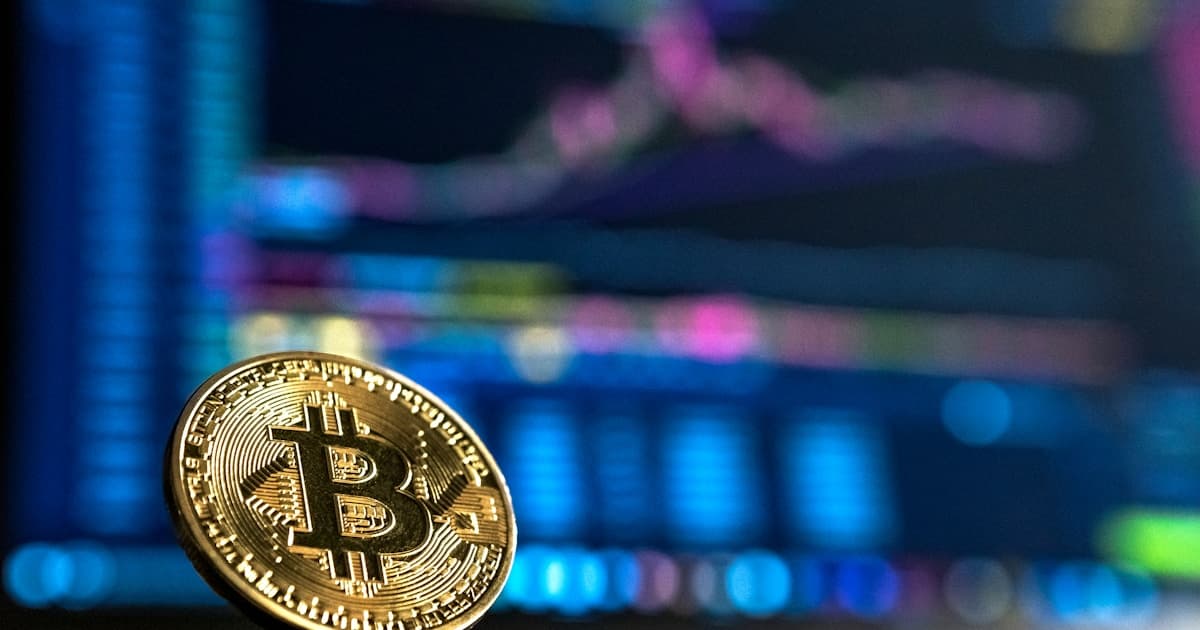
What Is Bitcoin and Why Invest?
Bitcoin is a decentralized digital currency created in 2009 by a person or group using the pseudonym Satoshi Nakamoto. Unlike traditional money issued by central banks, Bitcoin operates on a distributed network of computers worldwide called the blockchain. Every transaction is permanently and immutably recorded on this chain of blocks, eliminating the need for intermediaries like banks or payment processors.
One of Bitcoin's most important features is its programmed scarcity. Only 21 million bitcoins will ever exist. This contrasts sharply with fiat currencies that governments can print in unlimited quantities. Approximately every four years, an event called the halving cuts the mining reward in half. The most recent halving occurred in April 2024.
Historically, each halving has preceded significant bull cycles. Since 2020, institutional adoption has transformed the market. Companies like MicroStrategy and major investment funds have added Bitcoin to their balance sheets. In 2024, spot Bitcoin ETFs were approved in the United States, opening the doors for millions of traditional investors.
You do not need to be wealthy to start: you can buy fractions of Bitcoin from just a few dollars.
Requirements Before Buying
Before buying your first Bitcoin, you need a few things prepared. First, a valid government-issued ID. All regulated exchanges require identity verification known as KYC (Know Your Customer). You will also need a regular email address and a mobile phone number for two-step verification. A common question is how much money you need to start.
The answer: much less than you think. Most exchanges allow purchases from as little as $10. Bitcoin is divisible to 8 decimal places, so you can buy 0.0001 BTC with no problem. The smallest unit is called a satoshi. It is essential to understand some basic concepts. A wallet is where you store your bitcoins.
It holds the private keys that give you access to your funds on the blockchain. Software wallets are apps on your phone or computer, while hardware wallets are physical USB-like devices. You should also understand that Bitcoin is volatile: its price can move 10% in a single day. Never invest money you need for basic expenses like rent, food, or medical emergencies.
Step 1: Choose an Exchange
An exchange is the platform where you buy and sell cryptocurrencies. Choosing well matters because it affects fees, available payment methods, and security. Binance is the world's largest exchange by trading volume. It has low fees (0.1% per trade), supports P2P trading in many local currencies, and offers a clean interface in multiple languages.
Bybit has grown significantly with a clean interface and competitive fees. It is especially popular among futures traders. Coinbase is the most regulated and arguably the easiest to use for absolute beginners, though its fees are higher. KuCoin offers a huge selection of cryptocurrencies, including many smaller-cap tokens.
OKX is another solid alternative with low fees and comprehensive tools. When choosing, consider whether the exchange operates in your country, what payment methods it accepts, and how much it charges per transaction. Security track record and proof of reserves are also important factors.
Step 2: Create Your Account and Verify Identity
The registration process is similar across most exchanges. Visit the official website or download the official app. Be careful of fake sites: always verify the URL is correct. Enter your email and create a strong password with at least 12 characters combining uppercase, lowercase, numbers, and symbols.
Never reuse passwords from other services. The exchange will send a verification code to your email. Next comes identity verification (KYC). Basic verification typically requires your full name, date of birth, address, and a photo of your government ID. Advanced verification may require proof of address and a selfie holding your ID.
Approval time varies from 10 minutes to 48 hours depending on demand. While waiting, set up two-factor authentication (2FA) using Google Authenticator. This adds a security layer that makes unauthorized access nearly impossible even if someone has your password.
Step 3: Deposit Funds
Once your account is verified, you need to deposit money to buy Bitcoin. Depending on your country and exchange, you have several options. Bank transfers are the cheapest in terms of fees. Many exchanges allow direct deposits from your bank account, though processing can take 1-3 business days. Credit or debit cards are the fastest way to deposit, with funds available in minutes.
The downside is higher fees, typically 1.5% to 3.5%. P2P (peer-to-peer) trading connects buyers and sellers directly. You transfer money to another user via bank transfer or local payment methods, and the seller releases the cryptocurrency. The exchange acts as a trusted intermediary holding the seller's crypto in escrow until payment is confirmed.
P2P is especially useful in countries with banking restrictions. For P2P, always choose sellers with many completed transactions and good reputation. Never make transfers outside the exchange platform.
Step 4: Buy Bitcoin
With funds in your account, go to the spot trading section and find the BTC/USDT pair (or BTC/USD if you deposited dollars directly). There are two main order types. A market order buys Bitcoin at the current price instantly. Just enter how much you want to spend and the exchange executes at the best available price.
A limit order lets you set the price at which you want to buy. If Bitcoin is at $85,000 but you want to buy at $80,000, place a limit order at that price. If the price reaches that level, the purchase executes automatically. Important: do not confuse spot with futures. In spot, you buy real Bitcoin that you can withdraw to your wallet.
Futures involve leverage and derivative contracts, which are much riskier and not recommended for beginners. Stick to spot when starting out. Once your order executes, the bitcoins will appear in your exchange wallet.
Step 5: Store Your Bitcoin Safely
When you buy Bitcoin on an exchange, your funds are custodied by the platform. This is convenient but carries risk: if the exchange is hacked or goes under, you could lose your money. This is why many users transfer their bitcoin to a personal wallet. Hot wallets are software applications on your phone or computer.
They are always connected to the internet, making them practical for frequent transactions but slightly more vulnerable. Popular options include Trust Wallet, Exodus, and BlueWallet. Cold wallets (hardware wallets) are physical devices that store your private keys offline. Leading brands are Ledger and Trezor, costing $60-$150.
They offer the highest level of security and are ideal for storing significant amounts long-term. When you set up any personal wallet, it generates a seed phrase of 12 or 24 words. This phrase is the master key to your funds. Write it on paper and store it securely. Never store it on your phone, computer, email, or cloud service.
If someone gets your seed phrase, they can steal all your bitcoins irreversibly. For small amounts under $500, keeping funds on a reputable exchange with 2FA is reasonably safe.
Common Mistakes When Buying Bitcoin
The most frequent mistake is FOMO buying (Fear Of Missing Out). This happens when the price is surging and you buy impulsively fearing you will miss the gains. Often, you end up buying at the peak just before a correction. The smarter strategy is DCA (Dollar Cost Averaging): buy a fixed amount every week or month regardless of price, averaging your entry cost over time.
Not activating two-factor authentication (2FA) is another serious error. Without 2FA, anyone with your password can empty your account. Use Google Authenticator instead of SMS, as text messages are vulnerable to SIM swapping attacks. Sharing your private keys or seed phrase is a costly mistake. No legitimate service will ever ask for your seed phrase.
If anyone requests it through any channel, it is a scam without exception. Investing more than you can afford to lose is perhaps the most dangerous error. Bitcoin can drop 50% in weeks. If you invested your rent money or essential expenses, you will be forced to sell at a loss at the worst time. Only invest money you can lose completely without affecting your quality of life.
Finally, do not attempt active trading as a beginner. The vast majority of retail traders lose money. Buy, store safely, and think long term.
Regulated platforms to buy crypto
CoinbaseglobalSpot · NFT · Earn · Wallet
KrakenglobalSpot · Futures · Staking · Margin
GeminiNYDFS (US)Spot · Earn · NYDFS (EE. UU.)
BinanceglobalSpot · Futures · P2P · Staking · Earn
BitgetglobalCopy Trading · Futures · Spot
OKXglobalSpot · Futures · Web3 Wallet · DeFi
BybitglobalDerivatives · Futures · Spot · Copy Trading
KuCoinglobalSpot · Futures · Altcoins · Bots
Sources & references
Cripton AI is not affiliated with these platforms and does not endorse them. Verify each platform’s licensing in your country before using it.
Risk Disclaimer
This article is for informational and educational purposes only. It does not constitute financial, tax, or investment advice. Cryptocurrencies are highly volatile assets and you may lose your entire investment. Do your own research (DYOR) before making any decisions. Cripton AI is not responsible for losses resulting from investment decisions.
Ready to start trading?
Create a free account and practice with paper trading — zero risk.
Start Free TrialPrevious Guide
Copy Trading Guide: How to Copy Trade Crypto in 2026
Next Guide
How to Buy Ethereum (ETH) in 2026: Complete Guide
Keep learning
Live crypto prices
View all prices ›